HEKA E-Magazine · Sleep technology
What is an AI mattress?
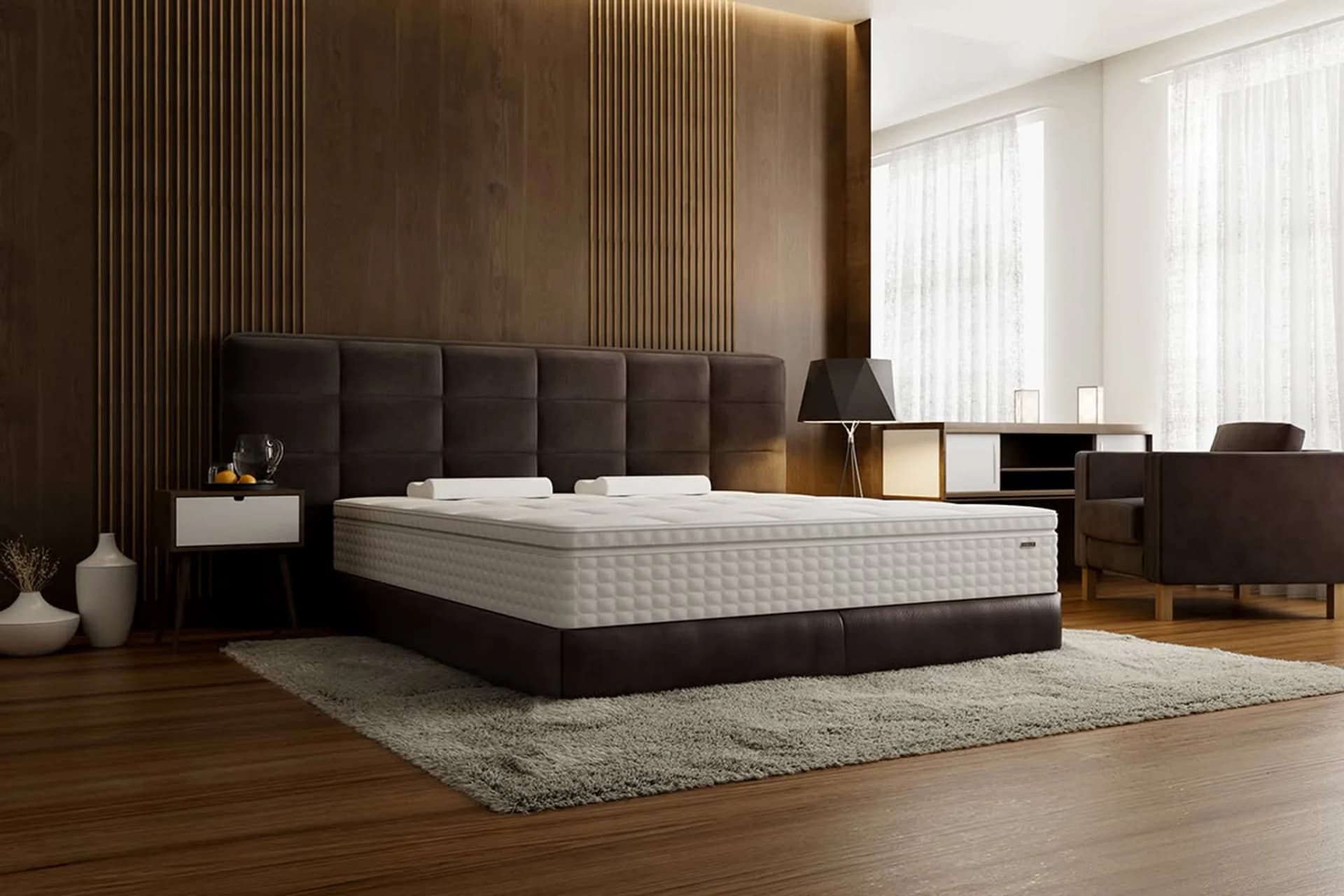
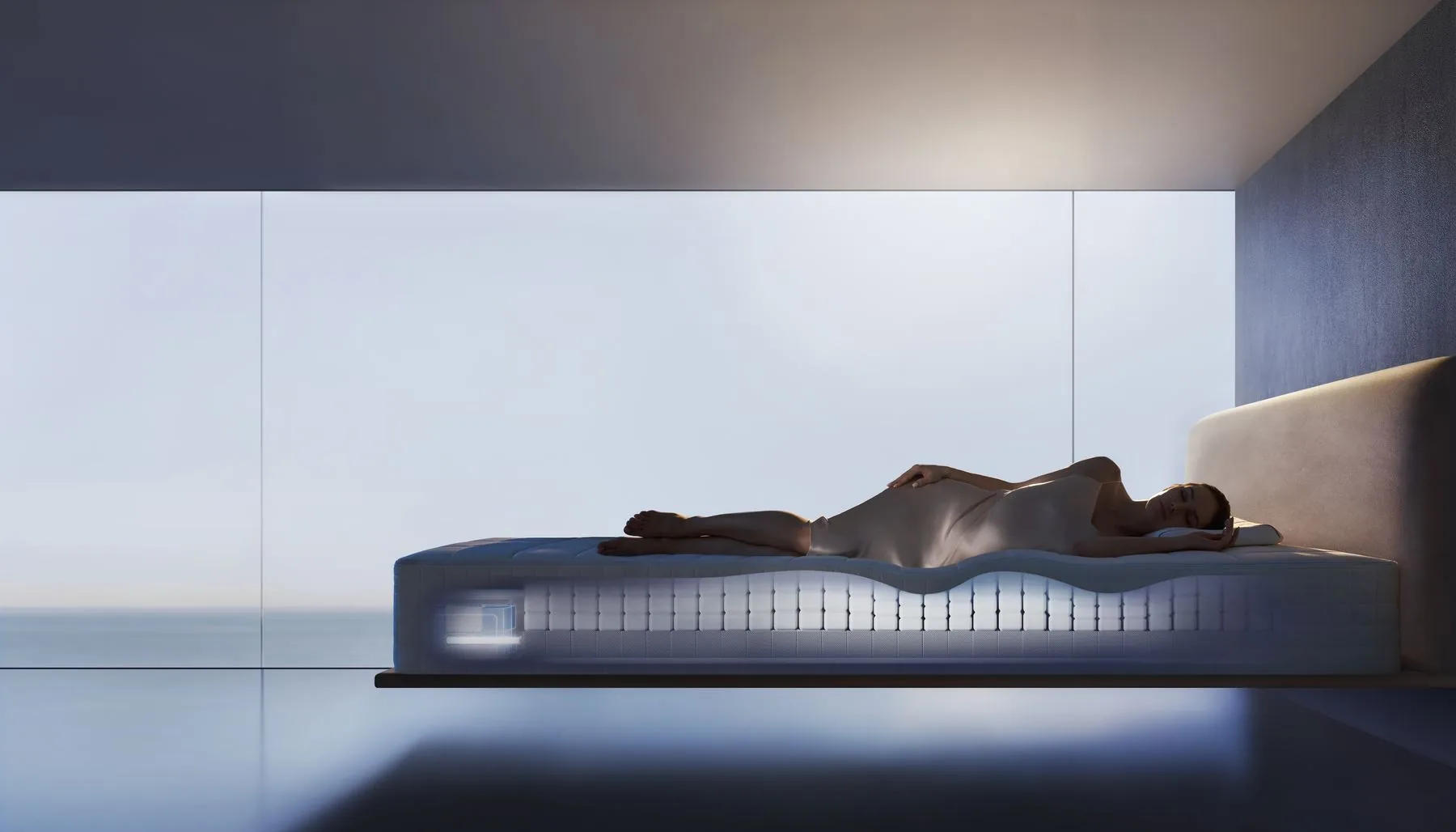
An AI mattress is a new generation of mattress built on artificial intelligence: it senses the body, analyzes sleep data and actively fine-tunes itself to adapt to the body and the sleeping position in real time.
- Feature · Sleep Tech
- 9-minute read
AI mattresses are researched and developed to raise the quality of sleep by creating resting conditions personalized to each person's body, sleeping position and the changes they go through during the night.
01Context
When “AI” comes to the mattress
Artificial intelligence (AI) is now present in many areas of life. From phones and cars to robot vacuums and health devices, AI is becoming a new technological standard.
The mattress industry is no exception.
More and more products are introduced as “AI mattresses”. Look closer, though, and you find that every brand explains the term differently. Some call a mattress with sensors AI. Some consider a connection to a phone app enough. Some products that merely record sleep data are marketed as AI mattresses too.
That raises an important question:
what actually makes a mattress an AI mattress?
02The nature of the technology
What AI really is
AI is not a feature or a marketing term. For an AI mattress system to respond actively, it must run a closed loop:
01
Sense
Collect data
Gathers data from the body and the environment
02
Analyze
Analyze the data
Processes it with AI algorithms
03
Decide
Make a decision
Based on the data and on established knowledge
04
Respond
Act on it
Actively changes the system's behavior
05
Adapt
Keep adapting
Optimizes on the data of the next cycles
The cycle repeats continuously. This closed loop is what makes AI what it is, just as self-driving cars, robots and medical devices operate.
In other words, AI does not just “know”: it has to understand, decide and act. A system that stops at recording data or displaying information to the user is not yet a complete AI system.
The same principle applies when judging an AI mattress.
03Definition
What is an AI mattress?
An AI mattress is not simply a mattress with sensors or a sleep-tracking app.
An AI mattress is a system that can sense the state of the body in real time, analyze that data on the basis of sleep science, decide on the right support and actively change the state of the mattress itself to meet the changes the body goes through during sleep.
The essential point: the system does not only observe,
it responds on the basis of data and science.

04Telling them apart
Common misconceptions about AI mattresses
Many modern features are mistaken for AI. They are smart features: useful, but not enough to make an AI system.
A phone app is not AI
The app only connects and displays; the decisions are still made by the user.
Sensors are not AI
Sensors only collect data; they cannot analyze it or decide on their own.
A sleep report is not AI
Recording and statistics are sleep tracking, not an ability to respond actively.
A massage or heating mode is not AI
These are comfort features that run on preset settings.
Adjusting with a remote is not AI
The user is still the one deciding; the system only carries out the command.
These features can make a product nicer to use, but they do not make an AI system without the ability to analyze, decide and respond in real time.
05Side by side
How is an AI mattress different from a smart mattress?
| A basic smart mattress | A true AI mattress |
|---|---|
| Collects data | Collects data in real time |
| Has sensors | Has a network of smart sensors |
| Has an app | Has an app (if needed) |
| The user makes the adjustments | The AI makes the adjustments |
| Runs on preset settings | Runs on live data |
| Limited response | Monitors continuously and readjusts whenever a change calls for it |
| No AI foundation | AI algorithms and a sleep-science database |
The biggest difference is not the number of features but how the system makes its decisions.
06Anatomy of the system
What does an AI mattress need to be made of?
01 / 05
A network of smart sensors
These are the “senses” of the system. The sensor network must recognize, all at once:
- Body weight
- Body shape and curves
- The pressure distribution across the regions of the body
- The sleeping position
- Micro-movements through the night
So the system always knows the real state of the person lying on it.
02 / 05
A large sleep-science database
To make the right decisions, the system has to be built on data and sleep-science knowledge with a clear provenance, research method and professional basis. This is the knowledge that lets the AI understand:
- How the body needs to be supported
- How much support each region of the body should receive
- How the natural curve of the spine should be maintained
- When the support needs to change
- How each change of posture changes the pressure on the body
The sensor data tells the AI what is happening; the sleep-science data tells the AI how to respond.
03 / 05
An AI chip and AI algorithms
This is the “brain” of the whole system. Here the sensor data is combined with the sleep-science database to analyze the current state of the person lying on the mattress and decide on the right support.
This is not guesswork but decision-making based on data and science.
04 / 05
An active response system
Once the AI has decided, the mattress must be able to actively change its own state to meet the change in the body.
This is the step that turns data and algorithms into real value for the person using it.
05 / 05
A closed loop running in real time
An AI mattress does not analyze once when you lie down. Throughout the night the system keeps monitoring the body's data. When it detects a change of posture or of pressure distribution, it analyzes, decides and actively readjusts its support.
SenseAnalyzeDecide on a scientific basisAdjustKeep sensing
Through this loop the system continuously monitors the state of the body and readjusts whenever it detects a change that calls for a response. The mattress does not need to be moving all the time.
07A point of view
AI in a mattress does not replace sleep science
A common assumption is that AI makes every decision on its own. That is not the case.
In the field of sleep, AI does not replace sleep science: it applies the findings of sleep science to each person, in real time. AI turns scientific research into support decisions that fit each person, at each moment and through each change of the body.
That is why AI and sleep science
are always two parts that complete each other.
08Real time
Why does real-time adjustment matter so much?
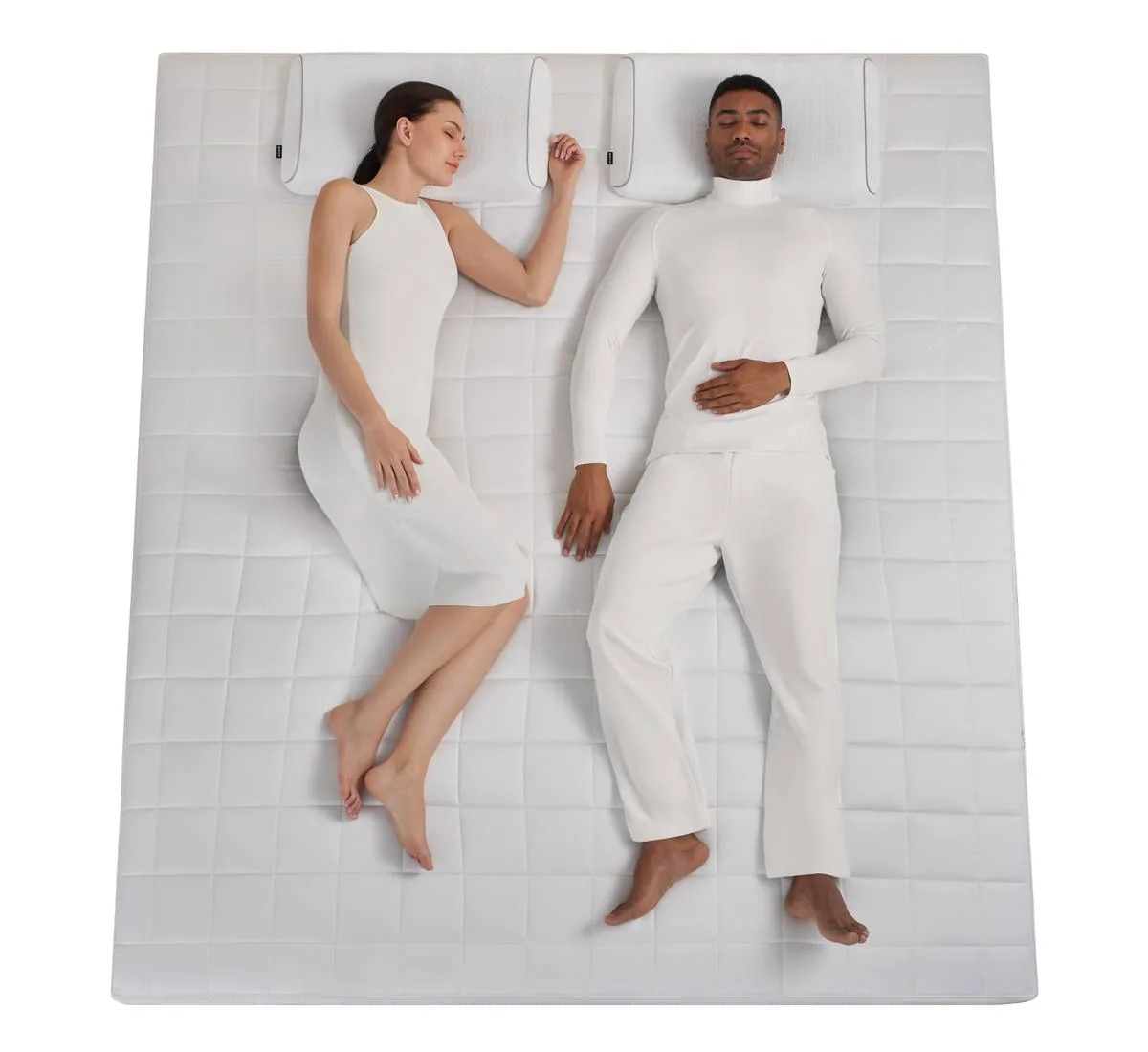
Over a night, a person changes position many times. Every change of position moves the points of pressure on the body.
If the mattress keeps one fixed state, its support may no longer be right once the body has moved.
An AI system aims to keep following these changes so that the support stays right throughout the night.
09Real value
What should an AI mattress deliver?
The value of AI lies not in the technology itself but in the outcomes the technology works towards.
Personalized support
Following each person's own characteristics instead of one common standard.
Support that stays with you
The right support even as the body changes position.
Pressure spread more evenly
Across the regions of the body, for as long as you lie there.
The natural curve of the spine protected
Helping to keep a favorable lying posture throughout the night.
Sleep with fewer interruptions
By following and adapting to the changes of the body.
A personalized rest
AI and sleep science together, to raise the quality of sleep.

10Buyer's guide
Checklist: how to tell an AI mattress
When looking at a product introduced as an AI mattress, these are the questions to ask:
Does it have a sensor network that recognizes weight, body shape, pressure, sleeping position and micro-movements?
Does it collect data in real time throughout the night?
Are its AI algorithms built on sleep-science data researched and tested by experts?
Does the AI combine the sensor data with a scientific database to make its decisions?
Does the system actively change the state of the mattress without the user doing anything?
Does it monitor continuously and readjust when the posture or the pressure distribution changes during the night?
Does it aim to personalize its support to each person?
11About the brand
HEKA, the inventor of the AI mattress
HEKA is the pioneer of the AI mattress, developed on a foundation that brings together artificial intelligence, sleep science and research into supporting the body. HEKA has developed the AI mattress since 2013, improved it over several product generations, and now runs a network of sleep experience centers in many markets around the world.
The HEKA AI Mattress is known for core capabilities such as recognizing the body and the sleeping position in real time, analyzing the pressure zones, adjusting its support and personalizing the rest on the basis of AI technology.

MedTech Breakthrough 2025
“Best Overall SleepTech Solution” category

Transparency
References
The scientific claims in this article are checked against published research and documents. HEKA does not own these studies; they are cited so that readers can verify them for themselves.
Conclusion
AI is not a sticker on a product
In the field of sleep, AI only delivers real value when it is built on sleep science, can sense the body in real time, analyze the data, decide on a scientific basis and respond actively to every change in the person lying on the mattress.
Understanding what “AI mattress” really means helps consumers tell technology from marketing terms, and choose on objective criteria and on the real value an AI system can bring to their sleep.
Continue the journey
Explore the HEKA AI Mattress
How it works, what it brings to health and sleep, and the private experience and companionship that come with it at HEKA.
Elite companionship
Talk to a HEKA Sleep Consultant

Ms. Đặng Thị Ngọc
Private Sleep Consultant
0383 888 8188:00–19:00 daily
Available now
A HEKA Sleep Consultant is ready to help you understand the AI Mattress and to prepare a private experience session that suits what you would like to explore.
HEKA E-Magazine
02 · What is an AI mattress?
What is an AI mattress?
You are reading this issue
03 · Explore the HEKA AI Mattress
A new standard for rest and recovery