Sleep health
Sleep health starts with a spine that is supported correctly
Adults should sleep 7–9 hours a night, and all that time the mattress helps decide whether the spine keeps its natural curve and whether the pressure is spread evenly. Because the body changes position dozens of times a night, the HEKA AI Mattress recognizes the posture in 3 ms and fine-tunes the support of each region in 10 ms, instead of holding one fixed firmness.
Four variables of the body
Why is there no mattress firmness that suits everyone?
Height, weight, the ratio of shoulders to hips, the natural curves of the spine and the way you lie make a map of contact that is yours alone. Two people of the same weight can still spread it very differently, and that map changes with every turn.
- 01
Body shape and weight
Everyone is built differently: on the same firmness, the load on the surface differs from the start.
- 02
The curves of the body
The shoulders, lower back and hips create raised areas and hollows along the axis of the body.
- 03
Posture changes all night
Polysomnography research records an average of 2.1–4.7 position changes an hour depending on age; about 2.7 an hour at 35–45.
- 04
Pressure moves
On the back the load falls on the back and pelvis; on the side the shoulders and hips become two prominent pressure points.
“Soft or firm?” is the question of the first moment. What the body needs is a fit that lasts all night.
The same HEKA AI Mattress, three states of support
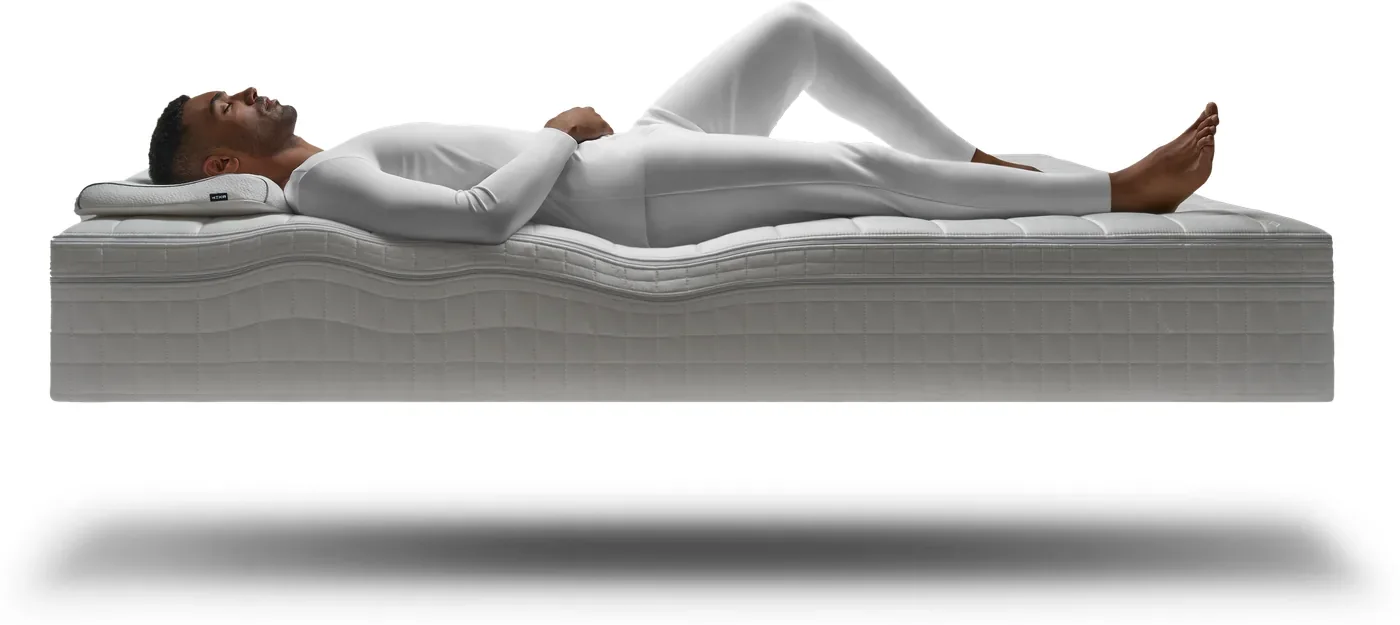
On the back: the surface rises at the lower back 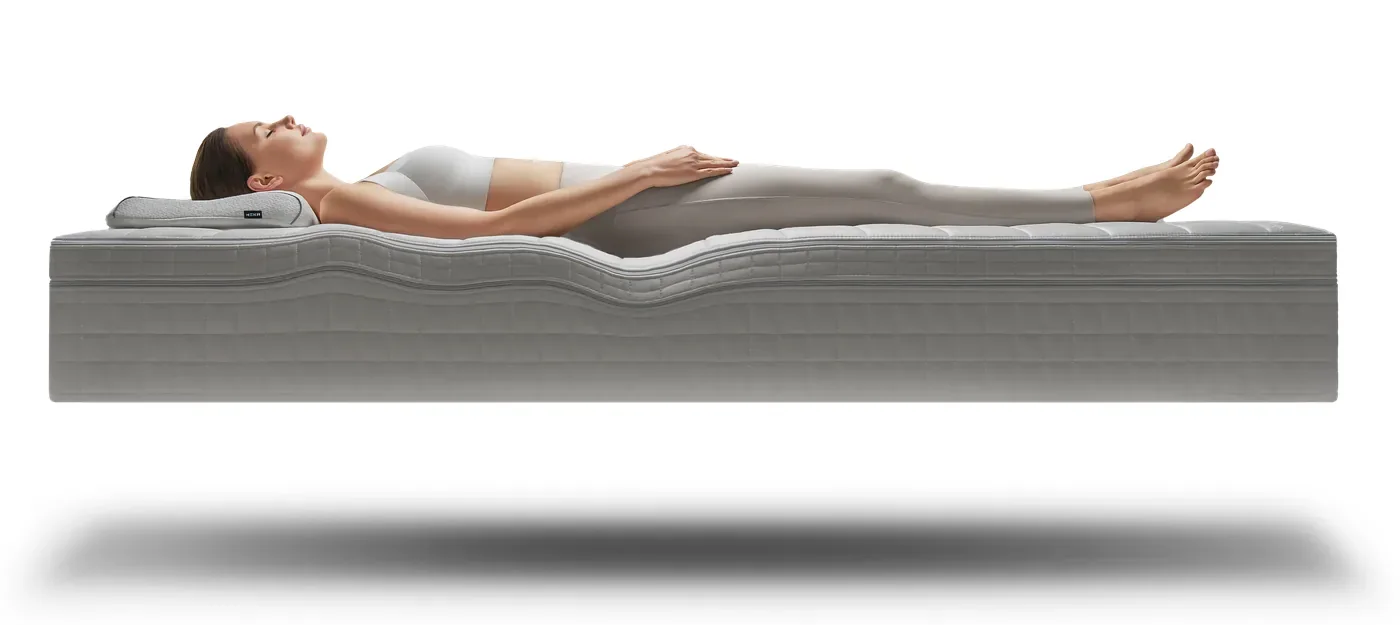
A lighter load: a different adjustment 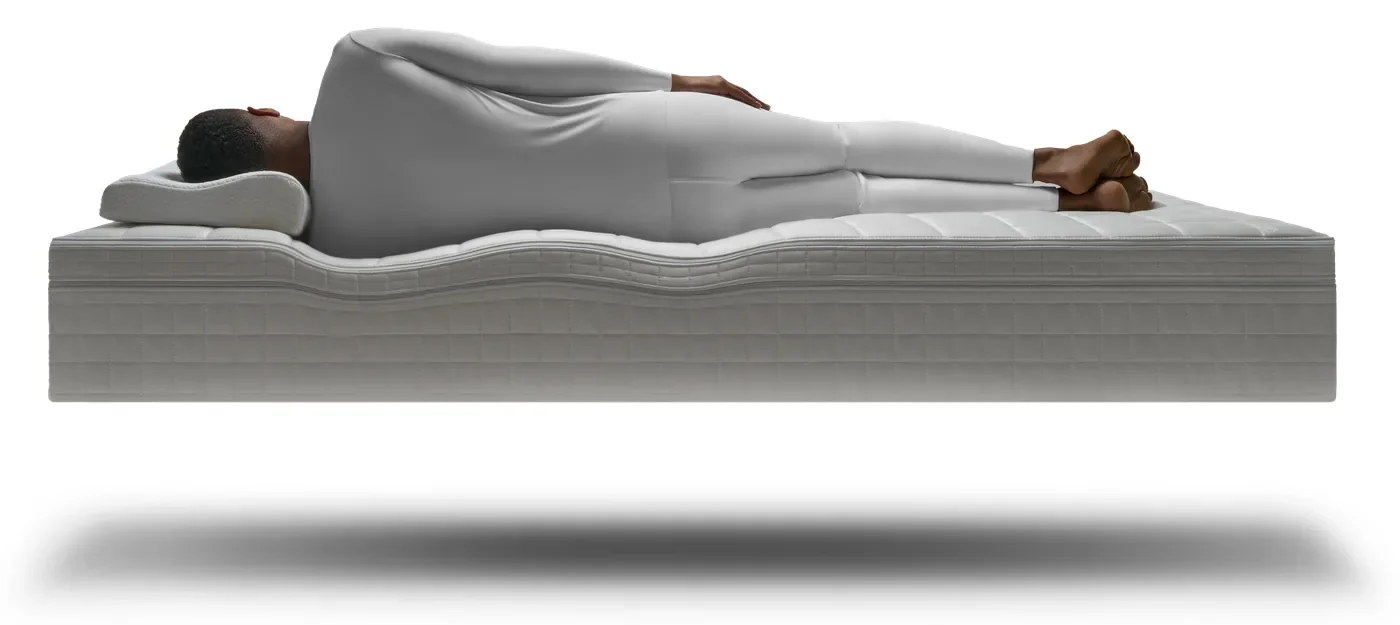
On the side: the shoulder sinks in, the waist is raised
The axis of the spine
How does a mattress that is too firm or too soft affect the spine?
Both pull the spine away from its natural curve. A mattress that is too soft lets the hips and lower back sink; one that is too firm does not follow the curve of the lower back, leaving a gap right under it.
A 2022 study in the journal Biology measured the curve of the spine on three mattresses, soft, medium and firm: against the medium one, the soft mattress raised the peak load on the intervertebral discs by 49% (in finite element simulation); the firm mattress flattened the lumbar curve by 10.6 mm and raised the contact pressure markedly.
Too firm: the lower back is left hanging
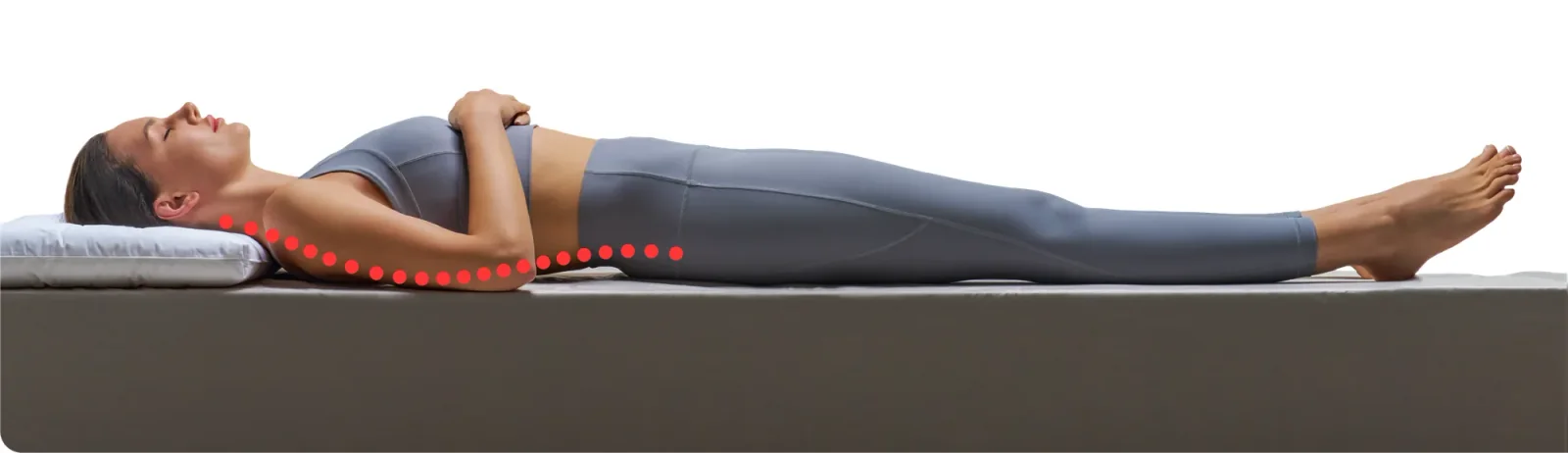
On the back: the surface does not follow the curve of the lower back, leaving a gap right under it. 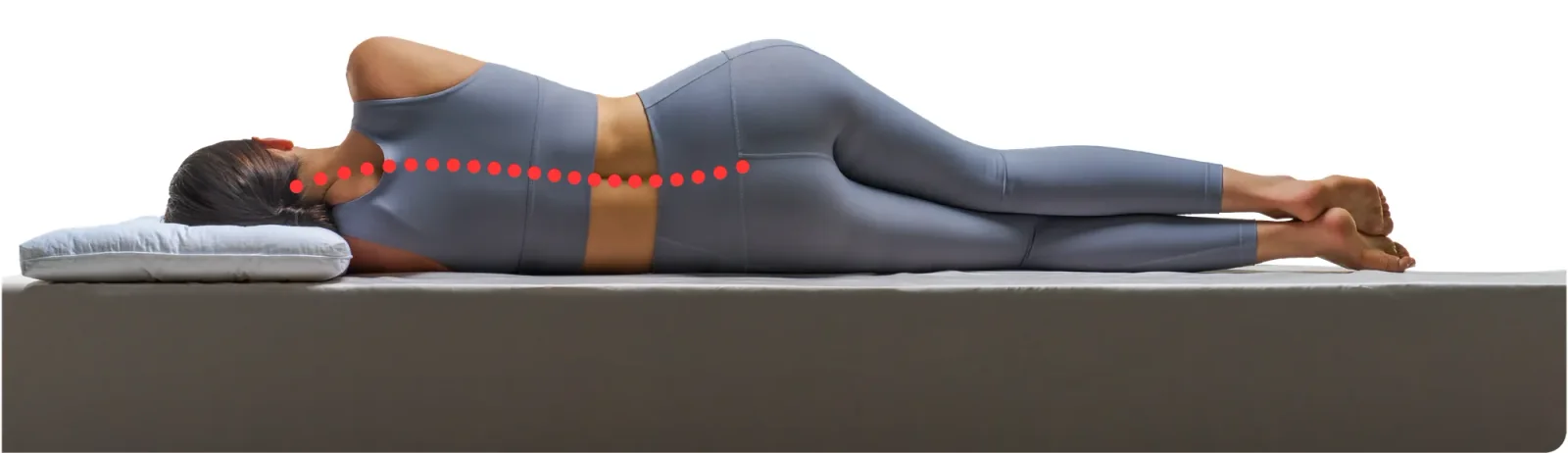
On the side: the shoulder and hip do not sink in enough, pushing the spine into an upward bend.
Too soft: the lower back sinks
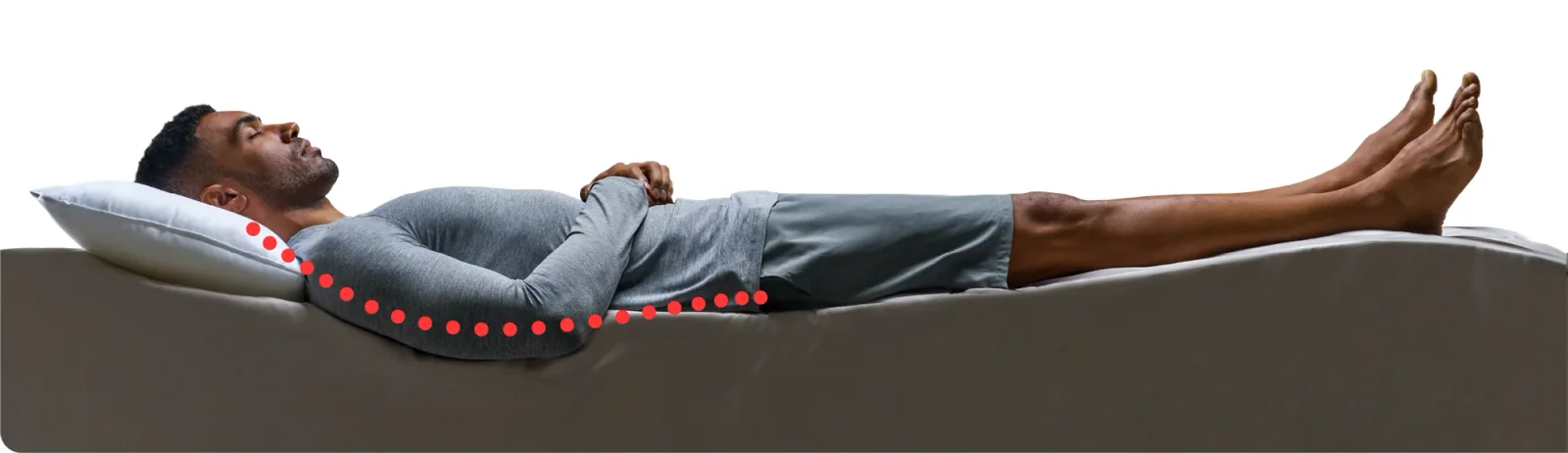
On the back: the pelvis and lower back sink deeper than the rest, and the spine sags. 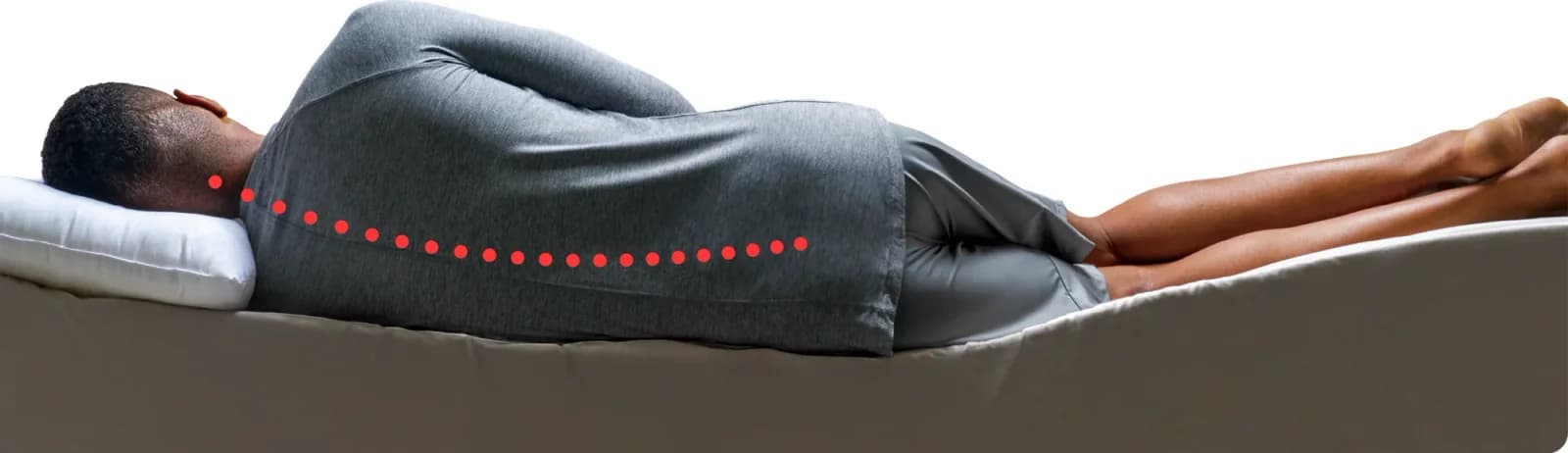
On the side: the hip sinks deeper than the shoulder, and the spine bends sideways.
The dotted red line marks the axis of the spine.
What every posture needs
The shoulder sinks in just enough, the lower back is fully supported, the hips are not squeezed. No fixed firmness achieves that on the back and on the side alike, so the surface has to change with the posture instead of asking the sleeper to pick one firmness. A review of 24 controlled trials concluded that a medium-firm mattress adjustable to each person gives the best results for comfort, sleep quality and spinal alignment.
The GAP index
What is the support gap (GAP)?
The GAP is the gap between the curve of the body and the surface of the mattress at key regions such as the neck, lower back and hips. The larger the gap, the more the pressure concentrates on a few points and the more easily the spine drifts out of line.
Traditional mattress
GAP 5–10 mm
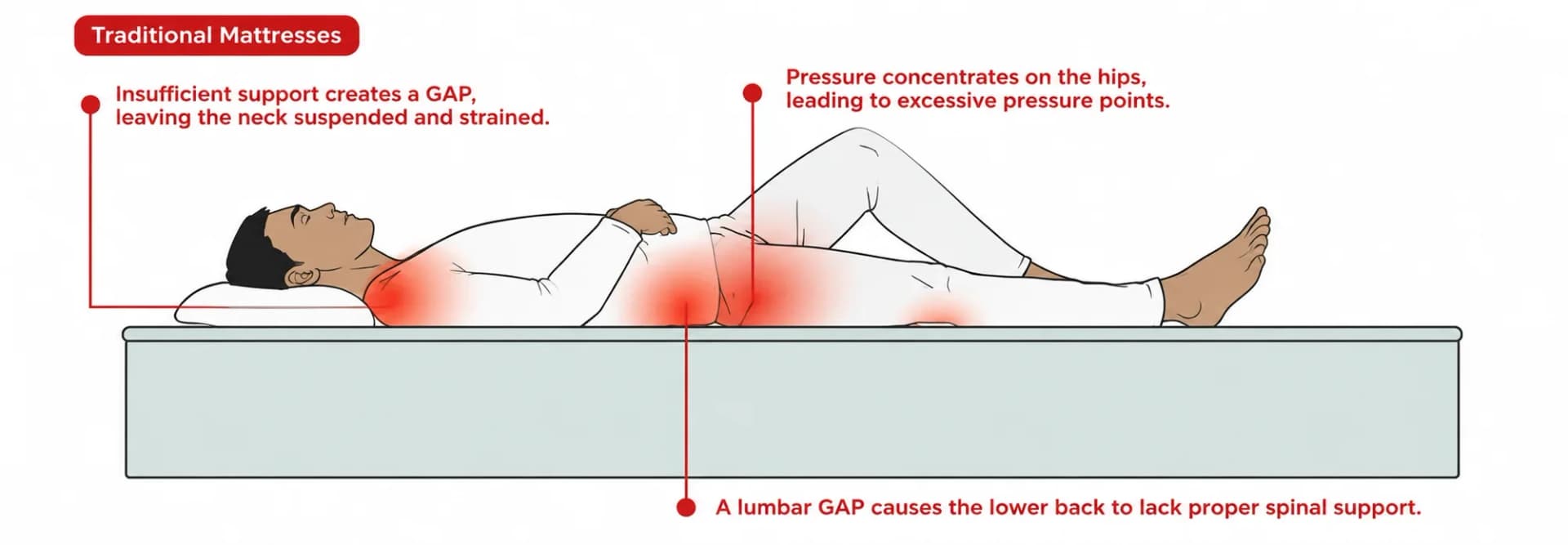
HEKA AI Mattress
GAP 1–2 mm
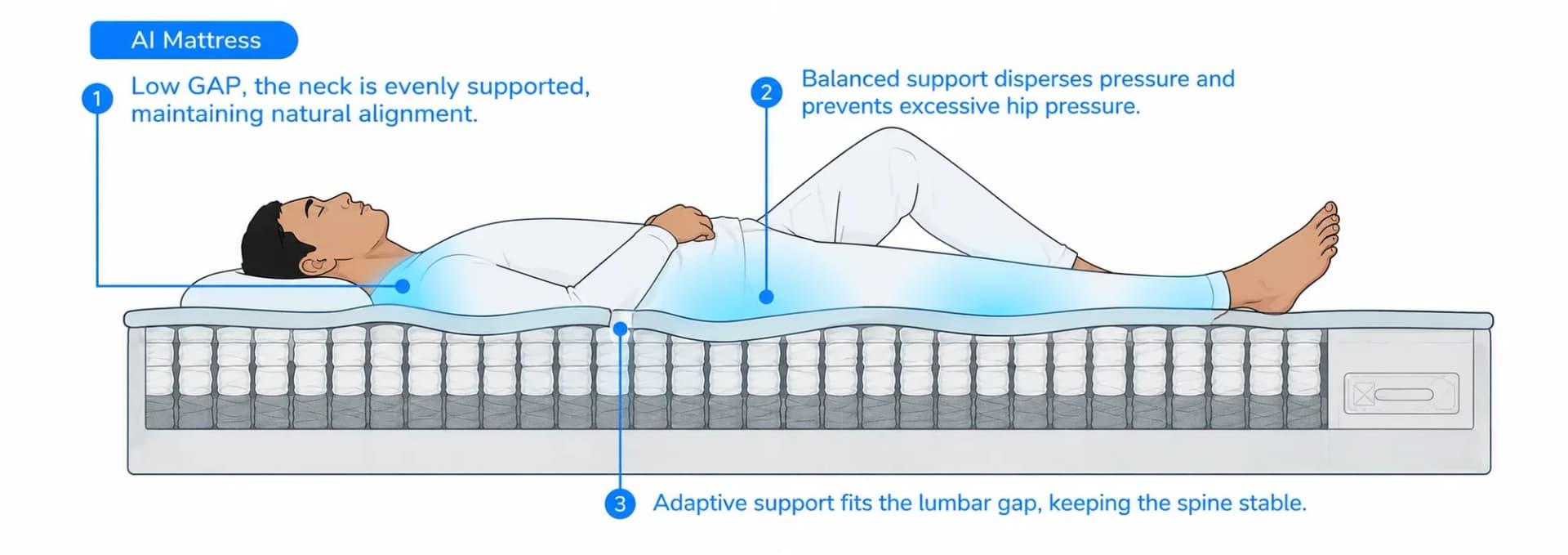
Diagrams reproduced as they are (in English) from the scientific report of HEKA · iFutureLab's R&D phase, kept unchanged to preserve the data.
The body pressure map
Why does the body turn over during the night?
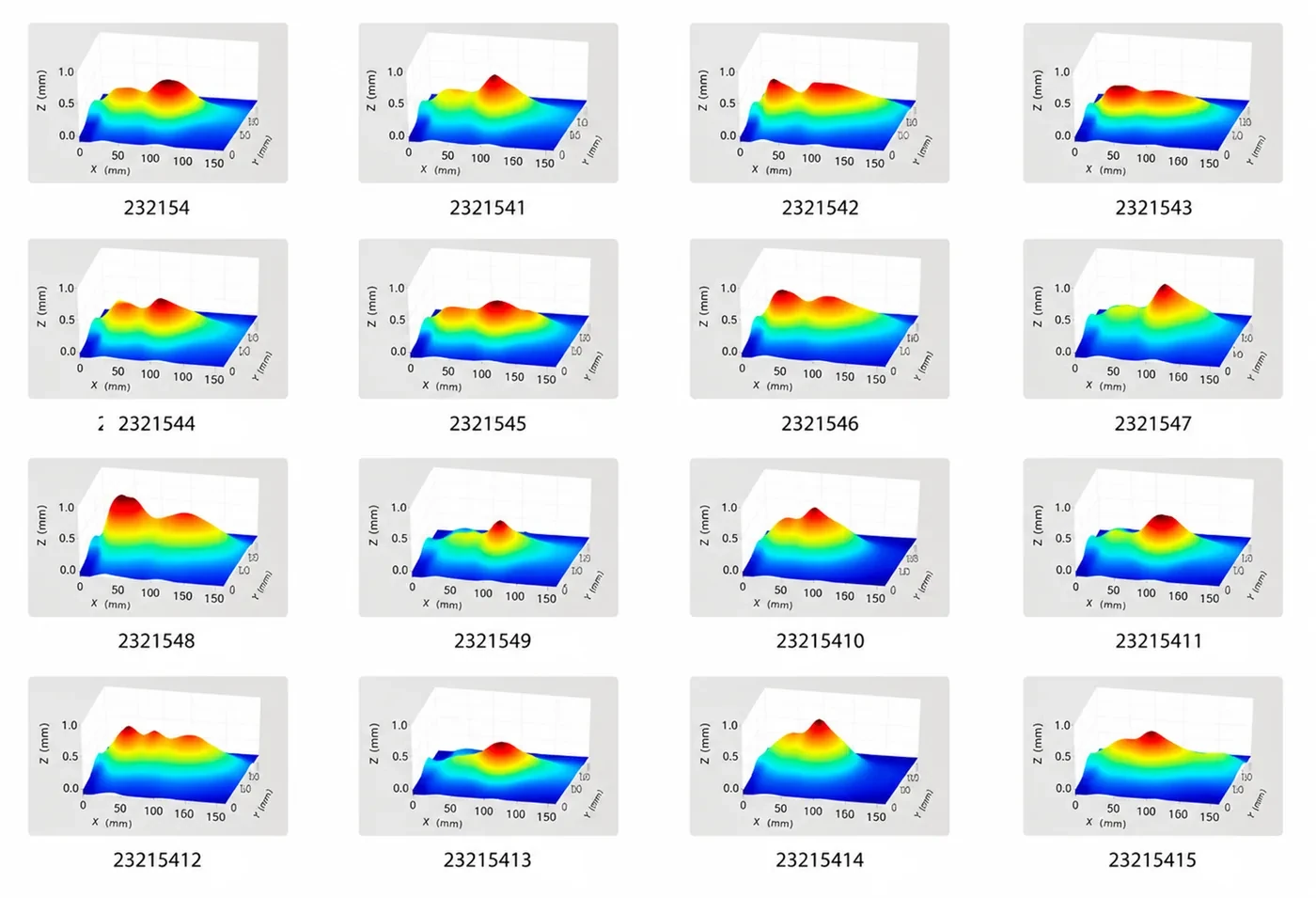
Every posture makes its own pressure map: on the side the load falls on the shoulders and hips, on the back on the back and pelvis. A sharp peak of pressure is a pressure point that reduces local blood flow, and that is one reason the body turns over to relieve it.
- 01
Collect the signal
A sensor network across the whole surface records the distribution of the load in real time.
- 02
Build the map
The signal is interpolated into a continuous pressure surface, from which the peaks of pressure are picked out.
- 03
Match the model
Compared with anthropometric models to infer the posture and the right support for each region.
The aim is not to eliminate pressure, but to spread it so that no region goes over the threshold.
Beyond HEKA's laboratory, a 2024 study for smart bedding design, measuring body pressure distribution in a sleep laboratory, also found that the sleeping posture clearly affects perceived comfort and that body pressure partly correlates with it; height, weight and BMI are common factors in perceived comfort.
Laboratory data
Two 8-hour nights on two surfaces: what changes?
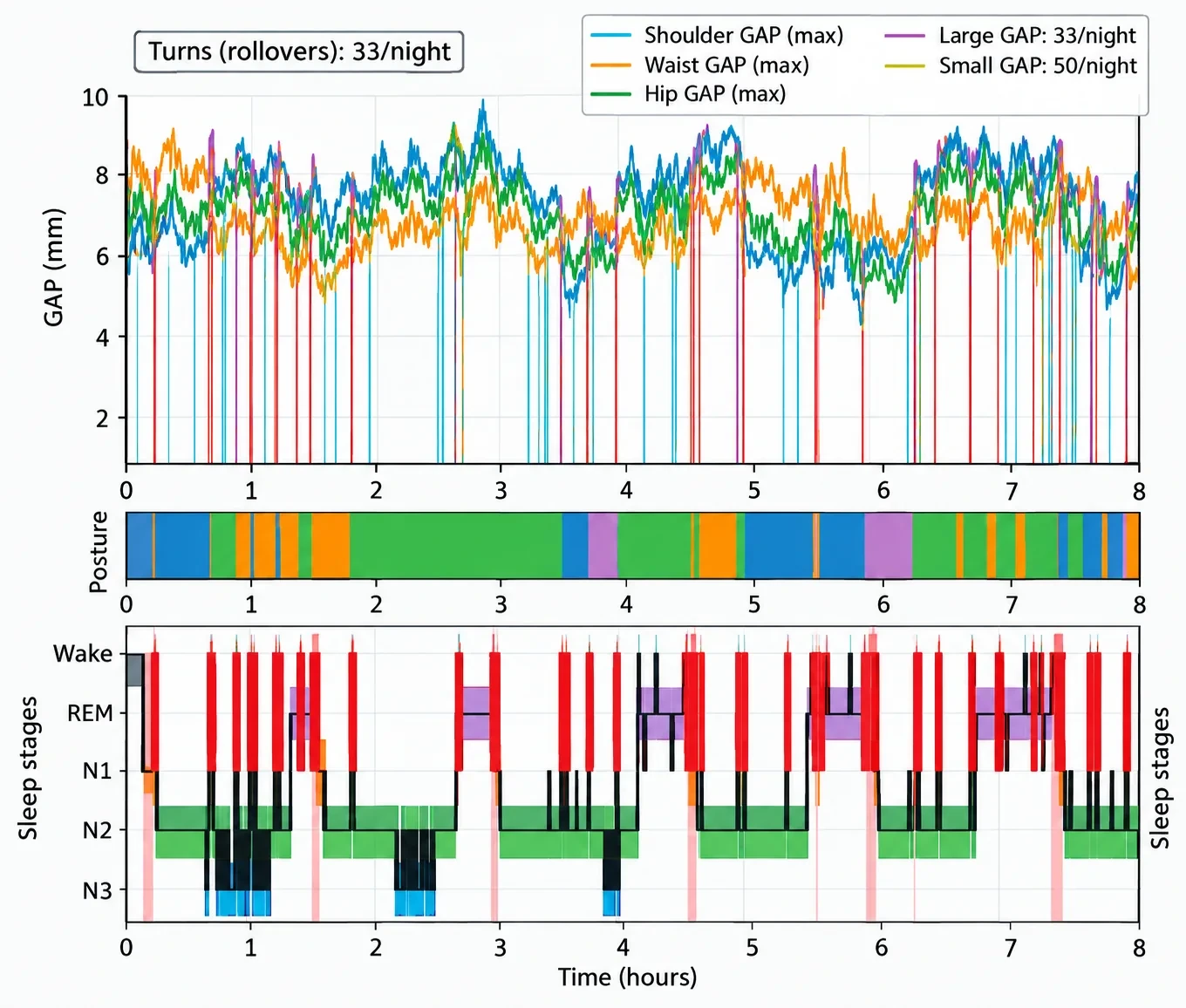
HEKA · iFutureLab measured two 8-hour nights in a controlled laboratory, one on a traditional mattress and one on the HEKA AI Mattress, on four measures: the GAP value, the number of large GAP events, the number of small GAP events and the number of position changes.
Support gap (GAP)
Down ≈ 80%
Traditional mattress: 5–10 mmHEKA AI Mattress: 1–2 mmLarge GAP events a night
Down ≈ 72%
Traditional mattress: 33HEKA AI Mattress: 9Small GAP events a night
Down 70%
Traditional mattress: 50HEKA AI Mattress: 15Position changes a night
Down ≈ 72%
Traditional mattress: 33HEKA AI Mattress: 9
Bar length: relative to the traditional mattress (= 100%). Large and small GAP events: the number of times a large or a small support gap was recorded during the night.
View the figures as a tableHide the table
| Measure | Traditional mattress | HEKA AI Mattress | Reduction |
|---|---|---|---|
| Support gap (GAP) | 5–10 mm | 1–2 mm | ≈ 80% |
| Large GAP events a night | 33 | 9 | ≈ 72% |
| Small GAP events a night | 50 | 15 | 70% |
| Position changes a night | 33 | 9 | ≈ 72% |
Sleep architecture: why the share of each stage matters
A night is not one uniform block. The body passes through 4–6 cycles of about 90 minutes, made of the stages N1, N2, N3 and REM. The stages are identified by polysomnography, which records brain waves, eye movements, heart rate, breathing and oxygen levels at the same time. The balance between the stages matters as much as the total time asleep, and it is that balance that a support surface can break when it forces the body to turn over.
- Awake
- Short awakenings during the night, most of them never remembered.
- N1 · Falling asleep
- The transition stage, easily broken by a movement.
- N2 · Light sleep
- The largest share of the night; heart rate and body temperature start to fall.
- N3 · Deep sleep
- The stage of physical recovery: tissue repair, bone and muscle building, a stronger immune system.
- REM
- The dreaming stage, tied to memory consolidation and emotional regulation.
Traditional mattress
HEKA AI Mattress
- Awake
- N1 · Falling asleep
- N2 · Light sleep
- N3 · Deep sleep
- REM
View the figures as a tableHide the table
| Stage | Traditional mattress | HEKA AI Mattress |
|---|---|---|
| Awake | 10% | 3% |
| N1 · Falling asleep | 12% | 5% |
| N2 · Light sleep | 50% | 47% |
| N3 · Deep sleep | 10% | 20% |
| REM | 18% | 25% |
- Deep sleep (N3)
- 10%→20%
- REM sleep
- 18%→25%
- Time awake
- 10%→3%
The original 8-hour charts of the R&D report
Traditional mattress · GAP 5–10 mm
HEKA AI Mattress · GAP 1–2 mm
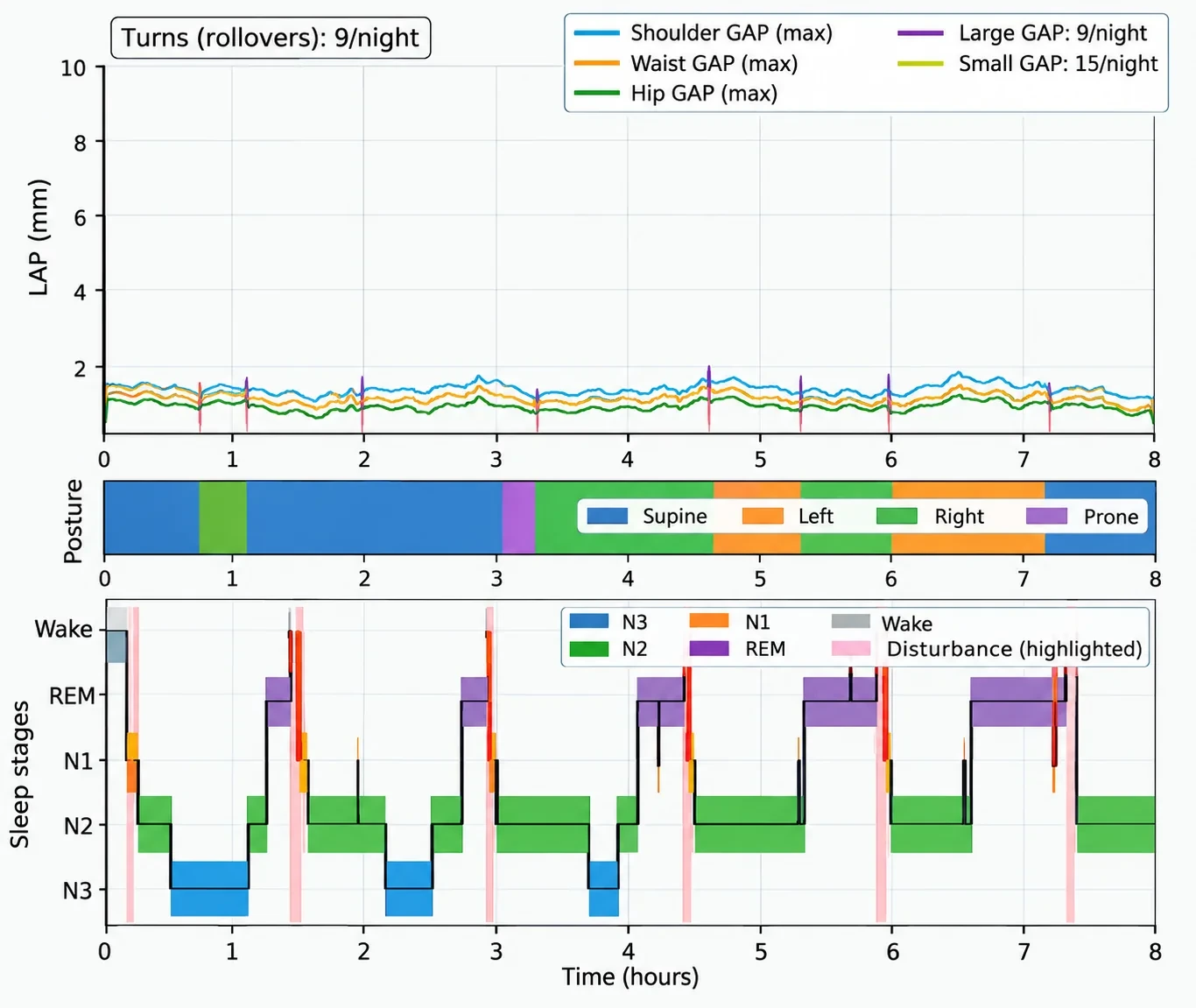
Each chart has three layers: the GAP over time at the shoulders, waist and hips; the lying position (on the back, on the left side, on the right side, on the front); and the sleep stages. Click a chart to open the full-size image.
About these figures. This is HEKA · iFutureLab's internal test data, measured under controlled laboratory conditions. It is not an independent clinical study; results may differ from person to person.
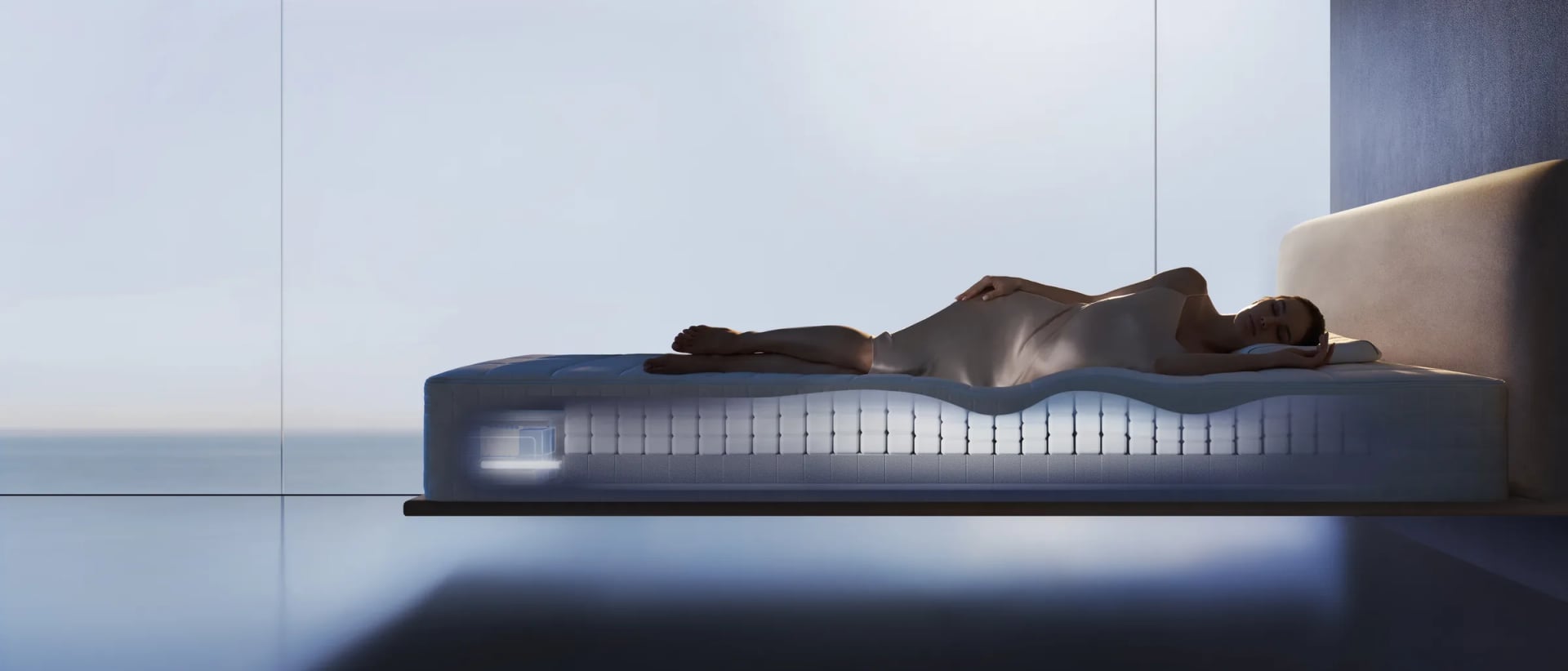
While you sleep, HEKA AI stays awake
In 3 ms the mattress recognizes your body shape and sleeping position; in 10 ms the feel of the surface is personalized.
*Illustrative image. Please refer to the actual product.
A closed loop
How does the HEKA AI Mattress adapt when you change position?
The HEKA AI Mattress runs a five-step loop all night: sense, analyze, decide, fine-tune and keep adapting. When the posture changes, the loop runs again; the mattress does not have to be moving all the time.
- 01
Sense
Senses the body
The Bio-Motion biological pressure sensors recognize body shape, posture and each region of the body in 3 milliseconds.
- 02
Analyze
Analyzes the data
The body's data is checked against the Stanford–iFutureLab Sleep Medicine Database.
- 03
Decide
Decides
The PRSR algorithm calculates the support for each region, with no fixed setting.
- 04
Respond
Fine-tunes
The AI support columns fine-tune the support of each region in 10 milliseconds.
- 05
Adapt
Keeps adapting
The new state becomes the input of the next cycle; the loop never stops.
The mattress does not have to be moving all the time: the system responds when it detects a change that calls for one.
One system, two ways of supporting
On the back
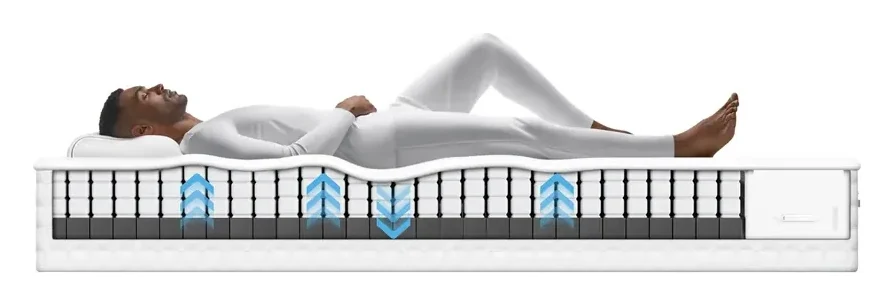
The shoulder and lower-back zones rise to fill the curve, the hip zone lowers just enough, and the spine keeps its natural curve.
On the side
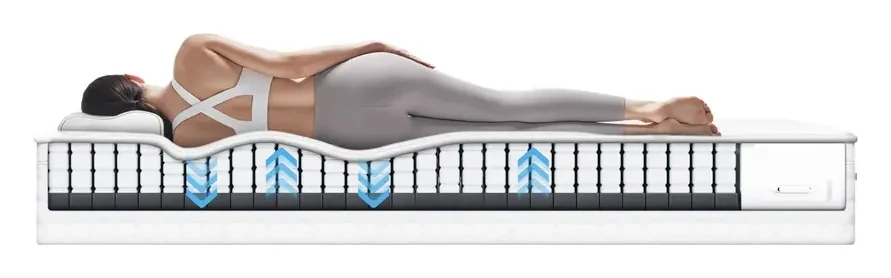
At the shoulder the adjustment reverses: the shoulder zone lowers so the shoulder can sink in enough; the waist zone still rises to fill the gap, and the hip zone lowers. The same body, the same mattress.
The value you feel
What does the body feel on the HEKA AI Mattress?
The true measure of the technology is what the body feels when it lies down, not the number of features.
Nothing to operate
No buttons and no remote: the HEKA AI Mattress actively senses and fine-tunes itself to the body and the lying position on a scientific basis.
Support by region
The shoulders, back, lower back and hips are received according to the real state of the body.
Almost silent
An ultra-quiet aerodynamic system.
Pressure spread more evenly
Towards less of the discomfort that comes with pressure points.
Adapts when you change position
It does not stop at one soft-or-firm setting: a new posture triggers a new response.
The curve of the spine kept
Helps keep a favorable lying posture for the neck and lower back all night.
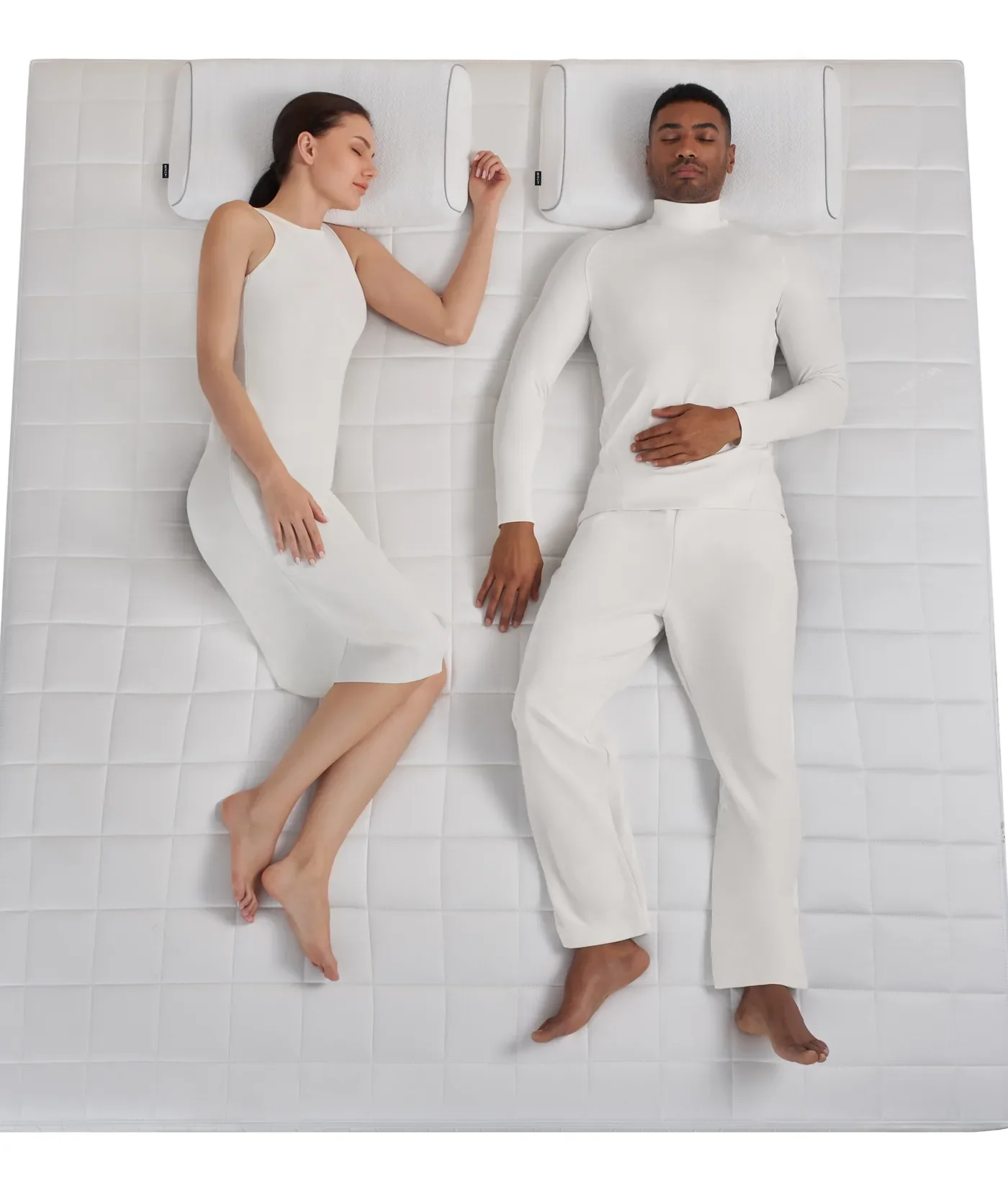
Dual-Zone
Two people, two support profiles on one bed
Dual-Zone technology uses two independent AI cores: each side of the bed has its own support profile and is not affected by the movements of the person beside it. Dual-Zone is available on the M Series, U Series and UU Series.
* Only beds 1.5 m wide and wider support two separately adjusted zones.
Who it is for
Who is the HEKA AI Mattress for?
The HEKA AI Mattress lines differ in their comfort layers, adjustment resolution and craftsmanship, but share one cycle of sensing, analyzing, deciding and fine-tuning.
Anyone who cares about the quality of their sleep
The HEKA AI Mattress actively adapts to the body and to each lying position, helping to keep the natural curve of the spine and to ease pressure points. That makes for the right conditions for quality sleep, helping the body rest and recover and leaving you refreshed and energized for the day.
Middle-aged and older sleepers
Steady support for the lower back in every position, towards fewer turns and fewer awakenings during the night.
Long working hours
The shoulders, neck and waist are supported in every posture, so the body can let go after a long day at a desk.
Side sleepers
The shoulder and hip sink in enough, the waist is raised, so the spine does not bend sideways.
Growing children
The four lines CM, CU, CUU and CG fine-tune their support to each stage of growth, in widths from 1.0 m to 1.4 m.
Questions about sleep health
Is a firm mattress better for the back than a soft one?
Not necessarily. In a study in the journal Biology (2022), a mattress that was too firm flattened the lumbar curve and raised the contact pressure, while one that was too soft raised the load on the intervertebral discs (in simulation). A review of 24 controlled trials (Sleep Health, 2015) found a medium-firm mattress adjustable to each person optimal for comfort, sleep quality and spinal alignment. If back pain persists, see a doctor.
How many times a night does a person change position?
According to the polysomnography study by De Koninck et al. (Sleep, 1992), the average number of position changes is 4.4 an hour at ages 3–5, 4.7 at 8–12, 3.6 at 18–24, 2.7 at 35–45 and 2.1 at 65–80. Over 7–8 hours of sleep, an adult changes position about 15–29 times a night.
What is the GAP support gap?
The GAP is the gap between the curve of the body and the surface of the mattress at the neck, lower back and hips. The larger the gap, the more the pressure concentrates on a few points and the more easily the spine drifts out of line. In HEKA · iFutureLab's internal measurements, the GAP on a traditional mattress is 5–10 mm and on the HEKA AI Mattress 1–2 mm.
How important is N3 deep sleep?
N3 is the deepest stage of NREM sleep, when the body repairs tissue, builds bone and muscle and strengthens the immune system (StatPearls, NCBI). On HEKA's side, internal test data recorded an N3 share of 10% on a night on a traditional mattress and 20% on a night on the HEKA AI Mattress. This is not an independent clinical study, does not prove a health benefit, and results may differ from person to person.
Is the HEKA AI Mattress a medical device?
No. The HEKA AI Mattress is a wellness product (supporting a healthy lifestyle), made for a more comfortable rest, consistent with the General Wellness guidance of the U.S. FDA. It is not intended to diagnose, treat or prevent any disease and does not replace the advice of a doctor.
References
Where the data on this page comes from
This page was written by the HEKA editorial team from HEKA's official documents and the studies below. HEKA's figures are internal test data, not an independent clinical study. The HEKA AI Mattress is a wellness product, not a medical device; the content is for information only and does not replace a doctor's diagnosis and treatment.
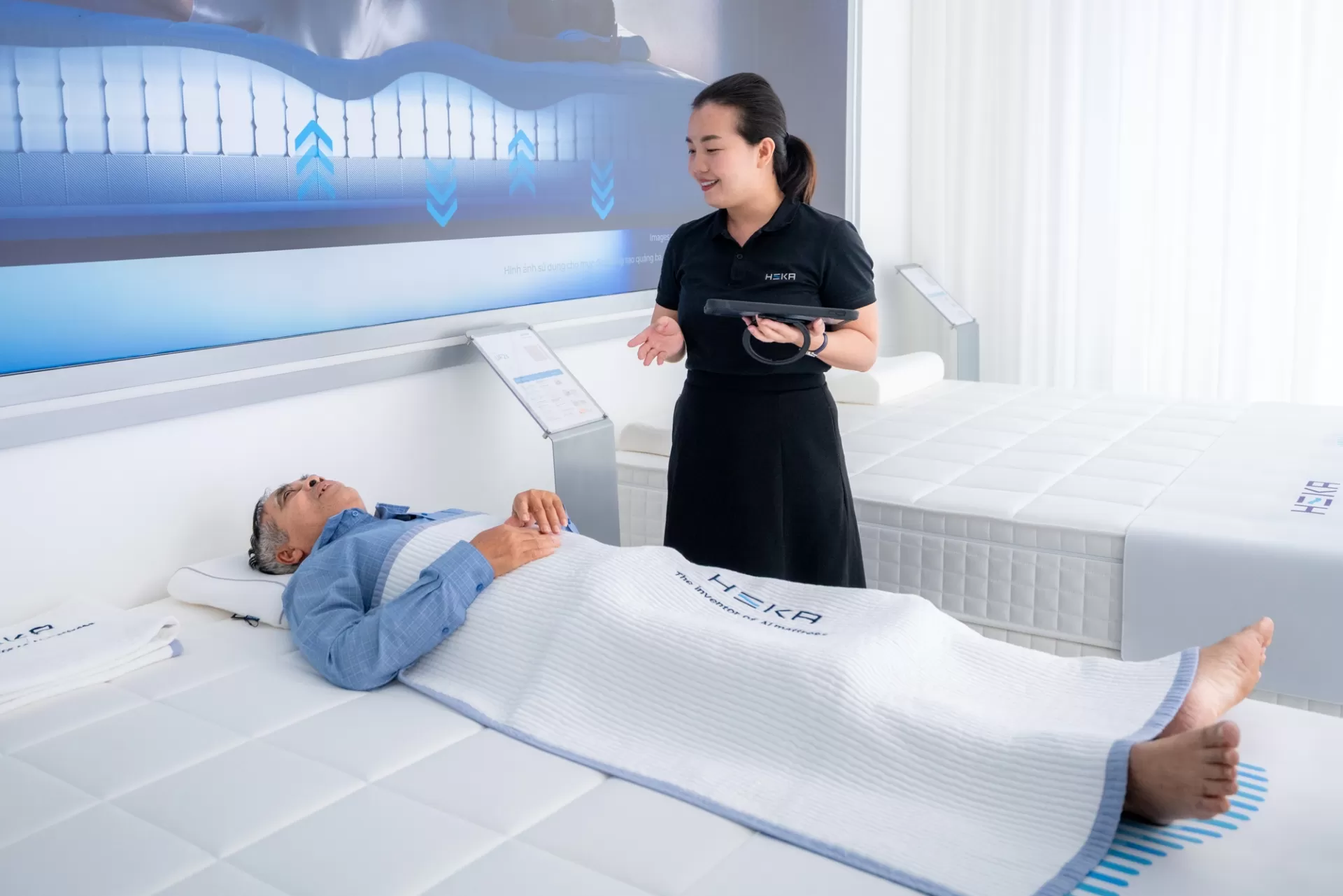
Feel the difference with your own body
Try it in person, on your back and on your side, with a HEKA sleep consultant at the Sala showroom, and see your own pressure map on the screen.
HEKA Experience Center Sala
A005 Sarica, Sala Urban Area, 06 D9 Street, An Khanh Ward, Ho Chi Minh City